Understanding Your Stress Response Patterns
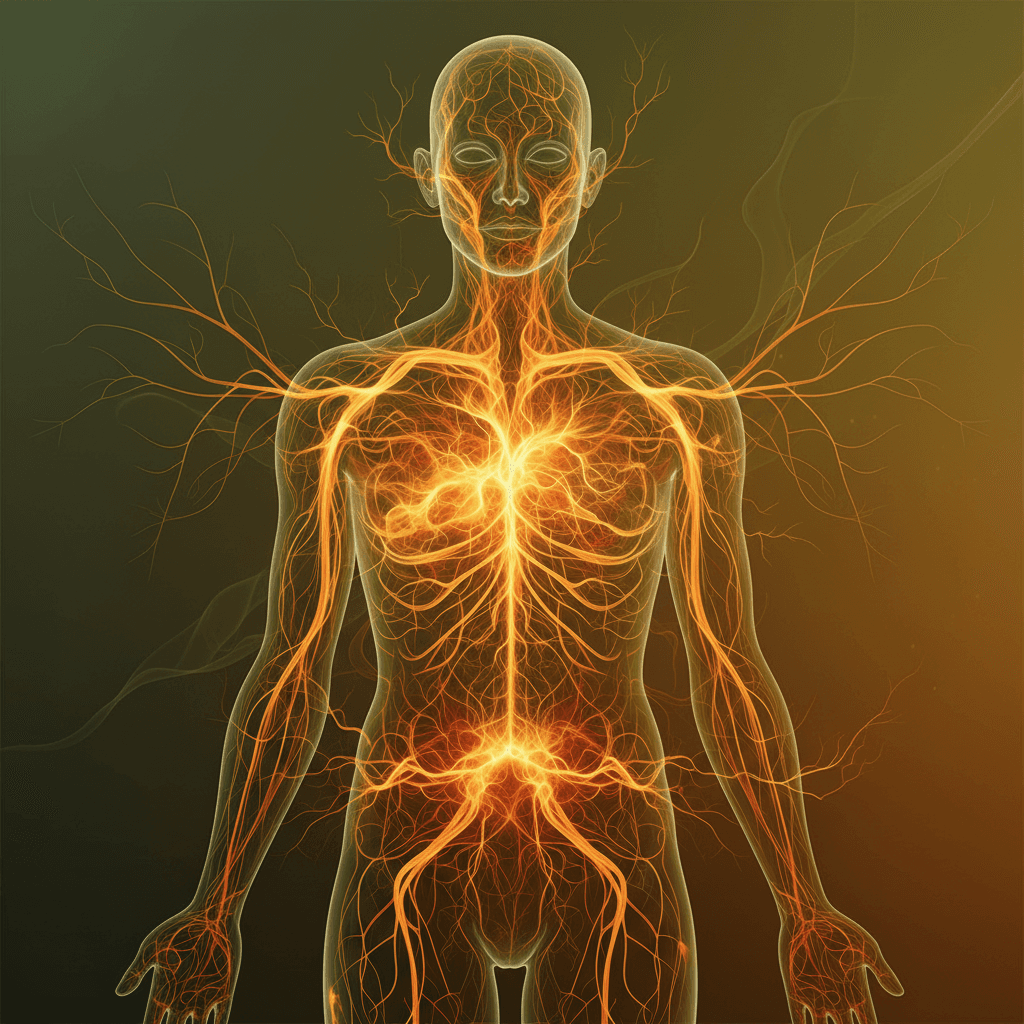
Beyond "Fight or Flight"
Most people have a passing familiarity with the fight-or-flight response - Walter Cannon's foundational concept from the 1920s describing how the sympathetic nervous system mobilizes the body to face or flee from threats. It's basic biology: heart rate increases, muscles tense, digestion pauses, attention narrows. The body prepares for action.
What Cannon's original framework didn't capture is the full range of stress responses humans exhibit, particularly in social contexts. Modern neuroscience - most notably Stephen Porges' polyvagal theory (1994, elaborated over three decades) - has expanded our understanding of stress responses from two options to at least four: fight, flight, freeze, and fawn. Each represents a distinct nervous system state with characteristic behaviors, emotional experiences, and interpersonal consequences.
Understanding which pattern you default to - because almost everyone has a default - is among the most practically useful things you can learn about yourself.
The Four Stress Response Patterns
Fight
The fight response mobilizes you toward the threat. In literal survival situations, this means physical confrontation. In modern social and professional contexts, it manifests as:
- Arguing or debating aggressively
- Controlling behavior - taking over projects, micromanaging, insisting on your way
- Criticism and blame - directing energy outward at others
- Irritability disproportionate to the situation
- Physical tension, particularly in the jaw, hands, and shoulders
People with a dominant fight response are often described as "intense," "driven," or "having a strong personality." In professional settings, the fight response can look like leadership - decisiveness, assertiveness, high standards. The shadow side is that it damages relationships, creates fear, and prevents collaboration.
The emotional signature: Anger, frustration, irritation, indignation, impatience. Fight is the externalization of threat - the energy goes outward.
Flight
The flight response mobilizes you away from the threat. In modern contexts:
- Overworking and staying constantly busy (running toward activity to run from discomfort)
- Perfectionism - if I get everything right, the threat will go away
- Physically leaving difficult situations - walking out of arguments, avoiding certain people or meetings
- Endless planning and preparation without execution
- Restlessness, difficulty sitting still
The flight response is the most socially rewarded stress response in professional settings. The person who works 60-hour weeks, who always has another project, who is constantly optimizing and improving - they may be driven by passion and purpose. Or they may be running from emotional discomfort that surfaces whenever they slow down.
The emotional signature: Anxiety, restlessness, urgency, panic that something isn't good enough, a persistent sense that you should be doing more.
Freeze
The freeze response immobilizes you. Porges' polyvagal theory explains this as a dorsal vagal response - the oldest branch of the autonomic nervous system, shared with reptiles, which shuts down metabolic activity in response to overwhelming threat. In everyday contexts:
- Inability to make decisions - not because you lack information, but because the decision-making system feels offline
- Zoning out during difficult conversations
- Procrastination that feels involuntary - you want to act but can't initiate
- Numbness or disconnection from emotions
- Feeling foggy, slow, or "stuck"
Freeze is often misinterpreted as laziness or lack of motivation. It's neither. It's a nervous system response to perceived overwhelm - the body's assessment that neither fighting nor fleeing will work, so the best survival strategy is to become invisible and conserve energy.
The emotional signature: Numbness, disconnection, helplessness, confusion, a sense of time slowing down or stopping.
Fawn
The fawn response - a term introduced by Pete Walker (2013) and now widely used in trauma-informed psychology - involves appeasing the threat through compliance and people-pleasing. In modern contexts:
- Immediately agreeing with others to avoid conflict
- Anticipating what people want and providing it before being asked
- Difficulty identifying your own needs or preferences
- Apologizing excessively, even when you've done nothing wrong
- Abandoning your own position the moment someone pushes back
Fawn is particularly common in professional settings where power dynamics make direct confrontation risky. The person who always agrees with the boss, who volunteers for every assignment, who never pushes back on unreasonable requests - they may be genuinely accommodating, or they may be fawning: managing perceived threat by making themselves indispensable and non-threatening.
The emotional signature: Anxiety about others' reactions, guilt about having needs, a chronic sense of not being authentic, resentment that builds slowly and sometimes erupts suddenly.
Polyvagal Theory: Why Your Nervous System Has a Hierarchy
Porges' polyvagal theory provides the neurological framework for understanding these responses. The key insight is that the autonomic nervous system operates as a hierarchy with three states:
-
Ventral vagal (social engagement): The newest evolutionary system. Active when you feel safe. Supports social connection, calm alertness, flexible responding. Your face is expressive, your voice has prosody, you can listen and think clearly.
-
Sympathetic activation (fight/flight): Mobilization. Active when you detect threat but assess that action might help. Heart rate increases, muscles prepare for action, attention narrows to the threat. Social engagement goes offline - you're not interested in nuanced conversation when you're perceiving danger.
-
Dorsal vagal (freeze/shutdown): The oldest system. Active when the threat is overwhelming and neither fighting nor fleeing seems viable. Conservation of energy. Dissociation. Collapse.
The critical concept is neuroception - Porges' term for the nervous system's below-conscious assessment of safety and danger. Neuroception happens before conscious thought. Your body decides whether the environment is safe, dangerous, or life-threatening before your thinking mind weighs in. This is why you can "know" intellectually that a meeting is harmless while your body is responding as if you're under attack.
Fawn doesn't fit neatly into Porges' three-state model - it's generally understood as a hybrid response, combining sympathetic activation (alert to threat) with social engagement strategies (appeasement) in a way that prioritizes survival through relationship.
Identifying Your Default Pattern
Most people have one primary stress response that activates most readily, with secondary patterns that emerge under specific conditions. Your default was shaped by your earliest experiences - the stress responses that got you through childhood tend to persist into adulthood, even when the original threats are long gone.
Reflection questions:
- When you feel criticized, what's your immediate (not considered) response? Do you argue (fight), get busy (flight), go blank (freeze), or agree (fawn)?
- When a deadline is approaching and you're behind, do you work harder and longer (flight), get frustrated at obstacles (fight), feel paralyzed (freeze), or ask others to take on your share while apologizing (fawn)?
- In conflict with someone important to you, do you push your position (fight), withdraw (flight or freeze), or yield immediately (fawn)?
- What physical sensations do you notice when stressed? Tension and heat (fight), restlessness and urgency (flight), numbness and heaviness (freeze), stomach knots and a desire to please (fawn)?
Most people recognize themselves clearly in one or two patterns. That recognition is itself therapeutic - Dan Siegel's phrase "name it to tame it" (2010) captures the research finding that identifying your stress response reduces its automatic power.
Working with Your Patterns
Knowing your default is useful. Knowing how to shift it is transformative.
For Fight-Dominant Responses
The core need is discharge - the fight response generates energy that needs somewhere to go. Physical activity, particularly intense exercise, directly addresses the physiology. But the longer-term work is learning to tolerate vulnerability. Fight often covers fear. When you can access the fear underneath the anger, the anger becomes less necessary.
Practice: When you notice the fight response activating - jaw clenching, voice rising, the impulse to control or criticize - pause and ask: "What am I actually afraid of right now?" The answer often reveals the real issue beneath the combative surface.
For Flight-Dominant Responses
The core need is stillness - not as punishment, but as tolerance-building. Flight-dominant people experience stillness as threatening because it allows the emotions they've been outrunning to catch up. Learning to sit with discomfort without immediately doing something is the essential skill.
Practice: Build in deliberate pauses. After completing a task, wait five minutes before starting the next one. Notice what arises in the gap. The anxiety you feel during those five minutes is information about what the busyness has been masking.
For Freeze-Dominant Responses
The core need is gentle activation - small, manageable steps that rebuild the nervous system's confidence that action is possible. Large demands overwhelm the system further. The smallest possible action - sending one email, writing one paragraph, making one decision - creates momentum.
Practice: When you notice freeze - the blank mind, the inability to start, the disconnection - try engaging the body first. Stand up, stretch, splash cold water on your face, hold ice cubes for 30 seconds. These sensory inputs activate the sympathetic nervous system just enough to break the dorsal vagal shutdown without tipping into fight or flight.
For Fawn-Dominant Responses
The core need is boundary recognition - rebuilding access to your own preferences, opinions, and limits. Fawn-dominant people have often lost touch with what they actually want because they've spent years tracking what others want.
Practice: Before any interaction where you might reflexively accommodate, ask yourself: "What do I actually want here?" Write it down. You don't have to assert it immediately - just knowing your own preference before entering the conversation interrupts the automatic compliance.
The Window of Tolerance
Daniel Siegel's "window of tolerance" concept (1999) provides a useful model for understanding stress response activation. The window of tolerance is the zone of arousal within which you can process information, engage socially, and respond flexibly. Above the window, you're in hyperarousal (fight/flight). Below it, hypoarousal (freeze).
The goal isn't to eliminate stress responses - they're adaptive in genuinely threatening situations. The goal is to widen your window of tolerance so that more situations fall within it, and to develop the capacity to return to the window more quickly when you're knocked out of it.
Window-widening practices include:
- Regular physical exercise (builds the nervous system's capacity for activation without overwhelm)
- Mindfulness practice (strengthens the observation of arousal states without automatic reactivity)
- Adequate sleep (a depleted nervous system has a narrower window)
- Social co-regulation (the presence of a calm, safe person helps regulate your nervous system - this is Porges' concept of "co-regulation")
- Structured coaching that provides regular, supported exploration of your stress patterns
The Long Game
Your stress response patterns took years to develop. They won't change overnight. But they do change - neuroplasticity is real, and the autonomic nervous system is more trainable than was previously believed. Porges himself has emphasized that the social engagement system can be strengthened through practices that communicate safety to the nervous system.
The shift happens gradually: you notice your default response earlier, the activation feels less overwhelming, you have a slightly longer pause between trigger and reaction, and you can choose a different response more often. Not always. Not perfectly. But measurably more often.
That's what emotional intelligence looks like at the nervous system level - not the suppression of stress responses, but an increasingly flexible relationship with them. The fight, flight, freeze, and fawn patterns don't disappear. They become options rather than defaults.
Nora Coaching
Editorial
The team behind Nora, building the future of AI-powered EQ coaching.
Related Articles

How EQ Transforms Your Relationships (All of Them)
The same EQ skills that make you a better partner make you a better colleague, friend, and parent. Gottman's research reveals the mechanics behind relationships that last.

Perfectionism Through an EQ Lens
Perfectionism isn't about high standards. It's about the fear behind them. Understanding this distinction - and building self-compassion as a counter - changes everything.

The Science of Gratitude: Beyond 'Just Be Thankful'
Gratitude practices work - but not the way most people do them. The research points to specific approaches that produce real benefits, and common pitfalls that undermine them.