The Neuroscience of Emotional Intelligence
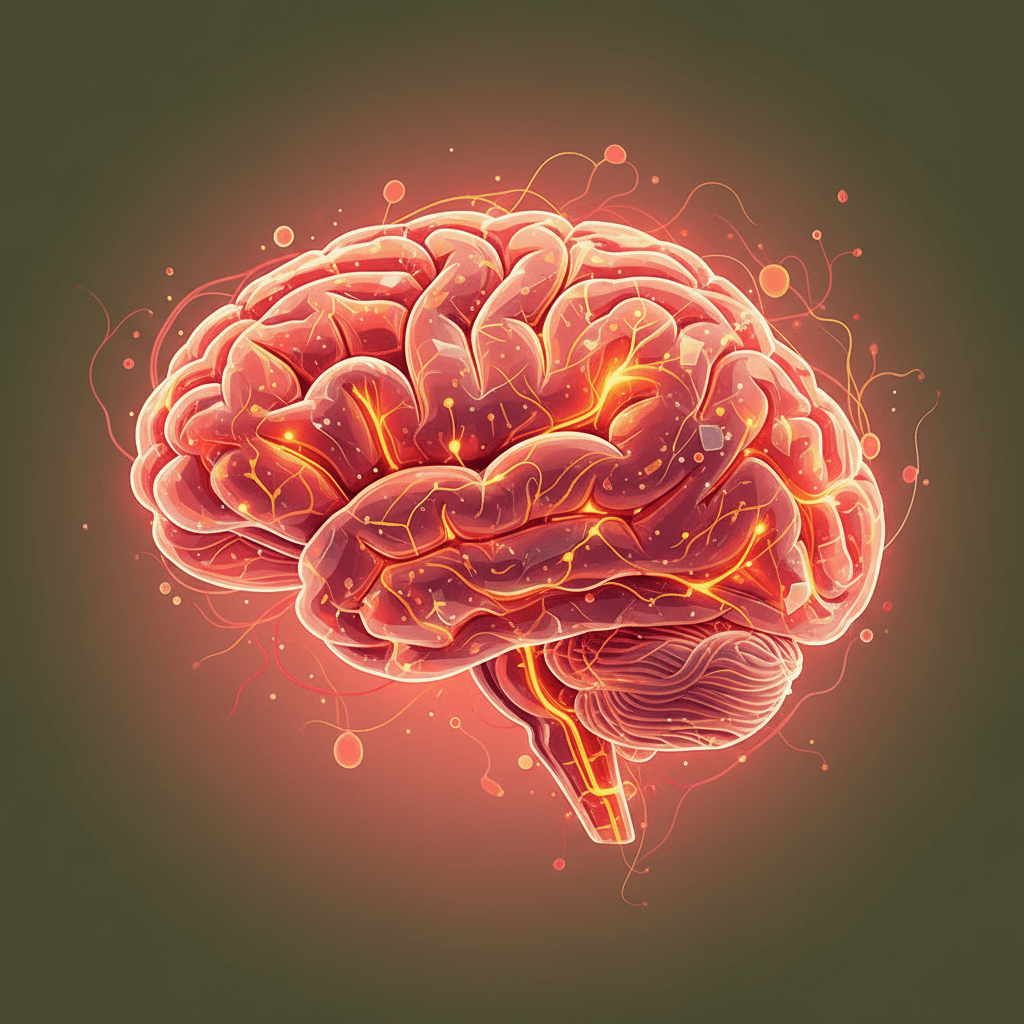
Emotions Have an Address
The idea that emotions live in the brain - rather than the heart, the gut, or some ethereal "spirit" - was settled science by the mid-20th century. But it took another fifty years of neuroimaging research to map out where and how emotional processing actually works, and why that matters for people trying to develop their emotional intelligence.
This isn't an academic exercise. Understanding the neural basis of emotional intelligence explains why some EQ skills develop quickly while others take months of practice. It explains why intellectually understanding your emotions and actually regulating them are fundamentally different tasks. And it explains why emotional intelligence is genuinely developable in adults - something that wasn't obvious from the psychology alone.
The Key Brain Structures
The amygdala: Your emotional alarm system
The amygdala - actually a pair of almond-shaped structures deep in the temporal lobes - is the brain's rapid threat detector. It receives sensory input and generates emotional responses before the conscious mind has finished processing what happened. This is why you can jump at a shadow before you realize it's just a shadow.
Joseph LeDoux's research (1996) demonstrated that sensory information reaches the amygdala via a "low road" that bypasses the cortex entirely. This pathway is fast (about 12 milliseconds) but imprecise. The amygdala essentially asks "could this be dangerous?" and triggers a response if the answer is "maybe." The cortex processes the same information more slowly but more accurately, often arriving at a different conclusion.
For emotional intelligence, this architecture has a specific implication: your first emotional reaction to any situation is generated by a system that prioritizes speed over accuracy. Learning to notice that initial reaction without automatically acting on it - the core of emotional self-management - means building the habit of letting the cortex catch up before you respond.
The prefrontal cortex: Executive control
The prefrontal cortex (PFC), particularly the ventromedial and dorsolateral regions, handles what neuroscientists call "executive functions" - planning, decision-making, impulse control, and the regulation of emotional responses.
Antonio Damasio's research with patients who had prefrontal cortex damage (1994) provided some of the most compelling evidence for the PFC's role in emotional intelligence. These patients could reason logically about hypothetical scenarios but made catastrophic decisions in their actual lives. Their IQ was intact; their ability to integrate emotional information into decision-making was destroyed.
Damasio's "somatic marker hypothesis" proposed that the PFC helps us use emotional signals - gut feelings, essentially - as information that guides decision-making. People with high emotional intelligence aren't ignoring their emotions when they make good decisions. They're better at reading and using the emotional data.
The insula: Internal awareness
The insular cortex processes interoceptive signals - information about internal body states. When you "feel" an emotion in your chest or stomach, the insula is translating physiological changes into conscious experience.
Craig (2009) demonstrated that insular activation correlates with the accuracy of interoceptive awareness - how well you can detect your own heartbeat, for instance. People with greater interoceptive accuracy tend to experience emotions more intensely and report them more precisely.
This connects directly to emotional self-awareness. Individuals who can accurately perceive their own physiological states tend to identify and label their emotions more precisely, which Feldman Barrett (2017) has shown correlates with better emotional regulation. You can't manage what you can't detect.
The anterior cingulate cortex: Conflict monitoring
The ACC sits between the limbic system and the prefrontal cortex and plays a critical role in detecting conflicts between automatic responses and desired outcomes. When you feel the urge to say something cutting but recognize it would be counterproductive, your ACC is generating the "wait, that's not what I want to do" signal.
Bush, Luu, and Posner (2000) found that ACC activation predicted people's ability to override automatic responses in favor of more deliberate ones. In EQ terms, this is the neural substrate of the pause between stimulus and response - that moment of choice that Viktor Frankl famously described as the seat of human freedom.
Neural Pathways and Emotional Habits
Understanding the individual brain structures matters, but what matters more for EQ development is understanding how they connect.
Emotional responses travel along neural pathways - networks of connected neurons that fire together. When a pathway fires frequently, it becomes stronger and faster, a principle captured in Donald Hebb's famous dictum: "neurons that fire together wire together" (1949).
This means your emotional habits have a physical basis. If you've spent twenty years responding to criticism with defensiveness, the neural pathway from "perceived criticism" to "defensive response" is literally a well-traveled road in your brain. The pathway is fast, efficient, and automatic.
Developing new emotional responses means building new pathways. At first, these new pathways are weak and slow compared to the established ones. This is why a newly learned emotional skill - pausing before reacting, for instance - feels effortful and often fails under stress. Under cognitive load, the brain defaults to the stronger, more established pathway.
But with sustained practice, new pathways strengthen while old, unused ones gradually weaken (a process called synaptic pruning). This is the neural basis for why EQ development takes months of consistent practice rather than a single workshop. You're not just learning a concept - you're rewiring your brain's default circuitry.
Davidson's Research on Emotional Style
Richard Davidson's work at the University of Wisconsin's Center for Healthy Minds has produced some of the most important findings for understanding emotional intelligence at the neural level.
Davidson identified six dimensions of what he calls "emotional style" (Davidson & Begley, 2012):
- Resilience - how quickly you recover from adversity (associated with PFC-amygdala connectivity)
- Outlook - how long positive emotions persist (associated with ventral striatum activity)
- Social intuition - how attuned you are to social cues (associated with fusiform gyrus and amygdala activity)
- Self-awareness - how well you perceive internal physiological signals (associated with insula activation)
- Sensitivity to context - how well you regulate behavior based on social context (associated with hippocampal function)
- Attention - how focused and clear your attention remains (associated with PFC activity)
These dimensions map closely onto the competencies measured in major EQ frameworks. More importantly, Davidson demonstrated through longitudinal neuroimaging studies that all six dimensions are modifiable through practice. Meditation practitioners showed measurable changes in the neural circuits underlying each dimension, and these changes persisted beyond the meditation sessions themselves.
The implication: emotional intelligence has a neural basis, and that neural basis is plastic. You're not stuck with the emotional brain you currently have.
Neuroplasticity: The Mechanism of Change
The term "neuroplasticity" refers to the brain's ability to reorganize its structure and function in response to experience. For decades, neuroscience assumed that the adult brain was essentially fixed - you got what you got by early adulthood and that was that.
That assumption was wrong. Research by Pascual-Leone (2005) and others has demonstrated substantial plasticity in adult brains across multiple domains: sensory processing, motor skills, cognitive abilities, and - crucially for our purposes - emotional regulation.
Several mechanisms drive neuroplasticity relevant to EQ development:
Synaptic strengthening. When you practice a new emotional response repeatedly, the synaptic connections in that pathway become more efficient. This is the neurological equivalent of a path becoming a road becoming a highway.
Myelination. Repeated activation of a neural pathway triggers oligodendrocytes to wrap the axons in myelin, an insulating sheath that dramatically increases signal speed. This is why practiced skills eventually become fast and automatic.
Neurogenesis. New neurons are generated in the hippocampus throughout adulthood, and these new neurons are incorporated into existing circuits, potentially supporting new learning patterns.
Cortical thickening. Lazar et al. (2005) found that meditation practitioners had measurably thicker cortical tissue in brain regions associated with attention and interoception (the PFC and insula), suggesting that sustained practice produces structural brain changes, not just functional ones.
What This Means for Developing EQ
The neuroscience translates into several practical principles for anyone working on their emotional intelligence:
Repetition trumps insight
Knowing that your defensiveness is triggered by perceived criticism is useful. Practicing a different response to perceived criticism fifty times is what actually changes the neural pathway. The brain changes through experience, not understanding.
Stress regresses skill
Under stress, the brain shifts resources from the PFC (deliberate, regulated responses) to the amygdala (fast, automatic responses). This means your newest, least-practiced EQ skills are the first to disappear when you're under pressure. Design your practice accordingly - start with low-stakes situations and gradually increase difficulty.
Mindfulness accelerates everything
Davidson's research (2004) found that mindfulness meditation - even brief, daily practice - strengthened PFC-amygdala connectivity, which is the neural infrastructure for emotional regulation. This is why many effective EQ coaching programs incorporate some form of mindfulness practice alongside behavioral skill-building.
Sleep is not optional
Walker (2017) demonstrated that sleep deprivation dramatically impairs PFC function while leaving amygdala reactivity intact or enhanced. After one night of poor sleep, your brain's emotional regulation capacity drops measurably. Chronic sleep deprivation undermines EQ development regardless of how much you practice during waking hours.
The body matters
Since the insula translates physical sensations into emotional awareness, practices that increase body awareness - exercise, yoga, body scan meditation, even regular check-ins with your physical state - support the development of emotional self-awareness at the neural level.
The Limits of the Neuroscience Lens
It's worth noting what neuroscience can't tell us about emotional intelligence. Imaging studies show correlations between brain activity and emotional competence, but correlation isn't mechanism. We can see that people with higher EQ show different patterns of PFC-amygdala interaction, but we can't yet specify the exact causal chain.
The neuroscience also doesn't address the relational and contextual dimensions of emotional intelligence. Your amygdala response in a board meeting is shaped by organizational culture, power dynamics, and personal history in ways that no brain scan can capture.
Understanding the neuroscience is valuable because it confirms that EQ is a set of trainable neural skills, not a fixed personality trait. But it's one lens among several. The psychology of emotional intelligence, the sociology of emotional labor, and the lived experience of emotional development all contribute insights that the neuroscience alone can't provide.
The Practical Takeaway
Your emotional intelligence is physically encoded in your brain's structure and connectivity. That structure was shaped by your experiences, and it can be reshaped by new experiences. The reshaping takes consistent practice over time - weeks and months, not days. And the most effective practice combines cognitive understanding with repeated behavioral rehearsal, supported by practices that strengthen the underlying neural infrastructure.
That's what the neuroscience says. What you do with it is between you and your prefrontal cortex.
Nora Coaching
Editorial
The team behind Nora, building the future of AI-powered EQ coaching.
Related Articles

Can You Actually Develop EQ? What the Research Says
The 'nature vs nurture' debate for emotional intelligence has been settled. Here's what longitudinal studies and neuroscience reveal about EQ development.

How to Measure Emotional Intelligence (And Why It's Tricky)
EQ assessments range from rigorous to questionable. Here's how to evaluate what you're actually measuring and whether the results mean anything.
Does EQ Really Predict Success? An Honest Look at the Evidence
The claim that EQ matters more than IQ makes for great headlines. The actual research is more nuanced - and more interesting - than the soundbites suggest.