Growth Mindset and EQ: What Dweck's Research Means for Emotional Development
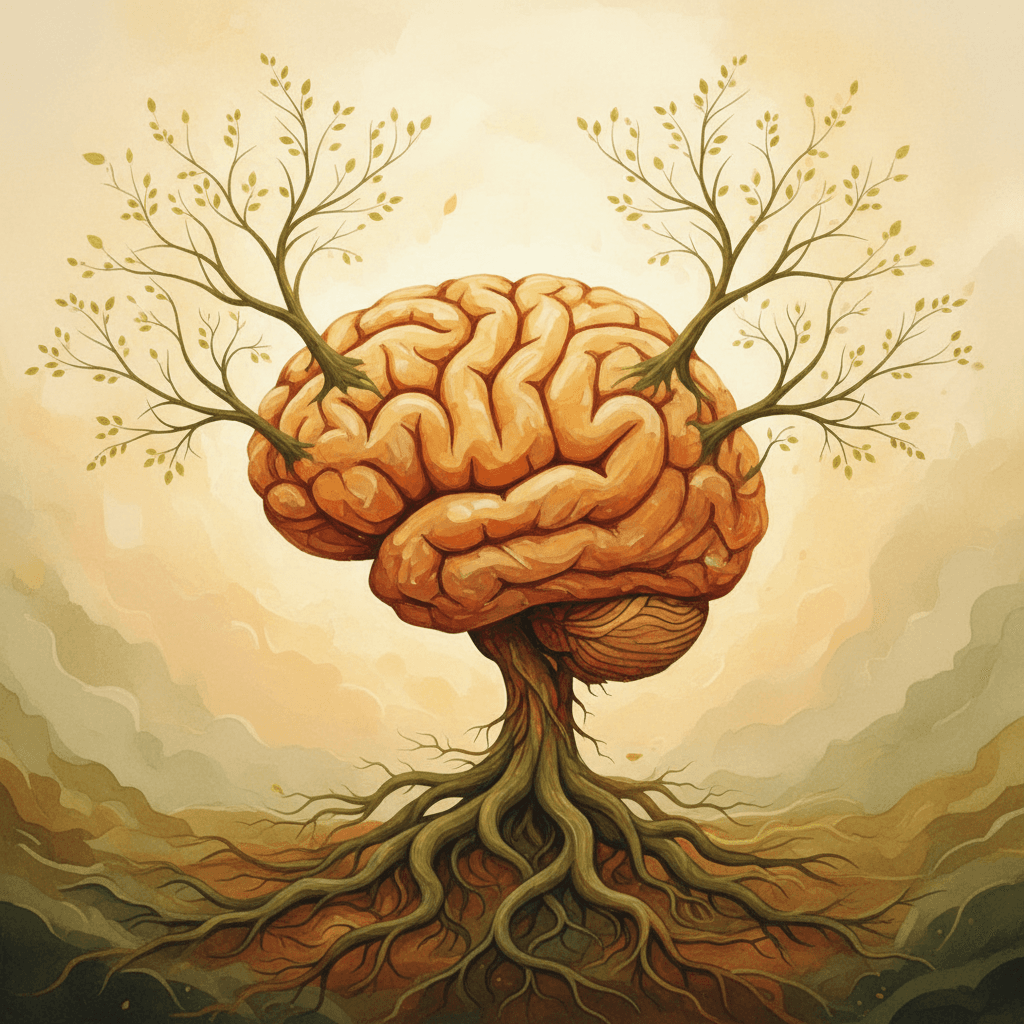
Beyond "Smart" and "Dumb"
Carol Dweck's growth mindset research, first published in academic form in the 1990s and popularized in her 2006 book Mindset: The New Psychology of Success, is most commonly associated with intelligence and academic achievement. People with a growth mindset (believing abilities are developable through effort) outperform those with a fixed mindset (believing abilities are innate and unchangeable), particularly when facing challenges.
What receives far less attention is that Dweck's framework applies to emotional abilities with equal or greater force. The belief that emotions are fixed traits versus developable skills fundamentally changes how people approach emotional challenges, how quickly they develop emotional competencies, and how resilient they are when emotional regulation fails.
This extension of growth mindset research into the emotional domain has significant implications for EQ coaching, organizational development, and how individuals think about their own emotional lives.
The Emotion Mindset Research
Tamir, John, Srivastava, and Gross (2007) published a study that applied the fixed vs. growth distinction specifically to beliefs about emotions. They found that people hold implicit theories about whether emotions are controllable and changeable ("incremental theory") or fixed and uncontrollable ("entity theory").
The findings paralleled Dweck's intelligence research with remarkable consistency:
People who believed emotions were controllable used more effective regulation strategies. When facing negative emotions, they were more likely to employ cognitive reappraisal - reframing the situation rather than simply suppressing the emotion. Reappraisal is one of the most effective regulation strategies identified in Gross's (2002) process model of emotion regulation.
People who believed emotions were fixed relied on suppression. Without the belief that they could change their emotional responses, they defaulted to trying to push emotions down rather than working with them. Suppression is not only less effective than reappraisal for reducing negative experience - it also impairs memory, increases physiological stress responses, and reduces social connectedness (Gross & John, 2003).
Emotion mindset predicted well-being over time. Students who entered college with a growth mindset about emotions reported better emotional adjustment, more social support, and less depression by the end of their first year. This held even after controlling for initial emotional well-being and the emotional challenges they faced.
The self-fulfilling prophecy
De Castella et al. (2013) extended this research and identified a self-fulfilling dynamic. People who believe emotions are uncontrollable invest less effort in learning regulation strategies. Because they invest less effort, they develop weaker regulation skills. Their weaker regulation skills then confirm their belief that emotions can't be controlled. The cycle perpetuates itself.
Conversely, people who believe emotions are developable invest effort in learning regulation strategies, develop stronger skills, and have experiences that reinforce their growth mindset about emotions. Success breeds effort breeds further success.
This has a specific implication for the early stages of EQ coaching: before teaching any emotional skill, it may be necessary to address the person's beliefs about whether emotional skills can be developed at all.
What Dweck's Original Research Actually Shows (and Doesn't)
It's worth being precise about the growth mindset evidence base, because the popular version has been oversimplified and in some cases overclaimed.
The strong findings
Dweck's core finding - that beliefs about the malleability of abilities influence motivation, effort, and response to failure - is well-supported. Multiple studies with large samples have demonstrated that growth mindset predicts greater persistence after failure, more adaptive responses to challenges, and stronger long-term performance trajectories (Dweck & Leggett, 1988; Blackwell, Trzesniewski, & Dweck, 2007).
The mechanism is specific: growth mindset changes how people interpret setbacks. Someone with a fixed mindset interprets failure as evidence of inherent limitation ("I'm just not good at this"). Someone with a growth mindset interprets failure as information about what to work on ("I haven't figured this out yet"). This interpretive difference changes behavior after failure - fixed mindset leads to withdrawal, growth mindset leads to increased effort and strategy change.
The nuances
Sisk, Burgoyne, Sun, Butler, and Macnamara (2018) conducted a meta-analysis of growth mindset interventions and found that the overall effect size was statistically significant but small. The effects were larger for economically disadvantaged students and for students facing academic challenges, suggesting that growth mindset matters most when people are in contexts where their beliefs about ability might otherwise lead them to disengage.
Dweck herself has been explicit about this nuance. In a 2015 article, she warned against what she called "false growth mindset" - the superficial adoption of growth mindset language without the deeper shift in beliefs and practices that the research describes. Telling people to "just believe they can improve" without addressing the environmental and structural factors that support or undermine that belief is an oversimplification.
Applying Growth Mindset to Emotional Development
With the research base clearly understood, here's how the growth mindset framework applies specifically to developing emotional intelligence.
Reframing emotional struggles
A fixed mindset about emotions sounds like: "I'm just an angry person." "I've always been bad at reading people." "I'm too sensitive - that's just who I am."
A growth mindset about emotions sounds like: "I tend to react with anger, and I'm working on expanding my response options." "Reading people is a skill I haven't developed yet." "My sensitivity is high - I'm learning to use it as a strength rather than being overwhelmed by it."
The reframe isn't just linguistic cosmetics. It changes the relationship between the person and their emotional pattern. Fixed-mindset framing fuses identity with behavior ("I am angry"). Growth-mindset framing separates them ("I have a pattern of reacting with anger"). That separation creates space for change.
Normalizing emotional regulation failure
One of the most damaging beliefs in emotional development is the expectation of consistent, immediate success. People try a new regulation strategy, it doesn't work under stress, and they conclude that they can't change - classic fixed-mindset interpretation.
Growth mindset research predicts this pattern and provides the counter-frame: regulation failure is data, not destiny. Every failed attempt provides information about the conditions that overwhelm your current skill level, the specific triggers that are hardest for you, and the strategies that need more practice.
Dweck's research on effort attribution is directly relevant here. When people attribute failure to insufficient effort or strategy rather than insufficient ability, they're more likely to try again and try differently. In emotional development, this means teaching people to respond to regulation failure with curiosity ("What happened there? What could I try differently?") rather than judgment ("I failed again - I'm just not emotionally intelligent").
The role of coaching in mindset change
Coaching is, in many ways, a growth mindset delivery system. A good coach consistently demonstrates the belief that the client can develop - not through empty affirmation, but through specific, evidence-based guidance about how to build skills.
Research by Heslin, Latham, and VandeWalle (2005) found that managers trained in growth mindset principles were subsequently more willing to coach their direct reports, provided more developmental feedback, and recognized employee improvement more readily. The mindset shift in the coach (or manager) affects the quality of the developmental relationship.
For EQ coaching platforms, this means the coaching approach itself needs to embody growth mindset principles: normalizing struggle, reframing setbacks as learning opportunities, providing specific skill-building guidance, and tracking progress over time to make development visible.
Practical Applications
For individuals developing EQ
Audit your emotion beliefs. Notice when you use fixed-mindset language about your emotional patterns. "I'm not empathetic" is different from "I haven't practiced empathy enough in that type of situation." The language you use internally shapes your motivation and effort.
Track progress, not perfection. Keep some record of your emotional development - a journal, assessment scores, feedback from trusted others. When you can see progress over weeks and months, it reinforces the belief that development is happening, even during periods when it doesn't feel that way.
Study the setbacks. When an emotional regulation attempt fails - you lose your temper, you shut down, you miss an emotional cue - resist the impulse to judge yourself. Instead, get curious about the conditions. Were you sleep-deprived? Was the trigger particularly intense? Were you using a strategy that doesn't fit the situation? Each failure contains diagnostic information.
Celebrate effort, not just outcomes. You tried to stay calm in a difficult meeting and only partially succeeded. Fixed mindset says: "Failed again." Growth mindset says: "I engaged with a difficult situation using a new strategy. The strategy needs refinement, but the effort was exactly right."
For managers and organizations
Frame EQ development as skill-building. When introducing EQ programs, explicitly frame emotional competencies as learnable skills rather than personality traits. The framing itself affects how participants engage with the development process.
Normalize the development timeline. Set realistic expectations: meaningful EQ development takes months, not days. Failure along the way isn't just expected - it's evidence that someone is pushing their growth edge.
Create psychologically safe practice environments. Growth mindset requires permission to fail. If emotional skill-building attempts that go wrong are punished (through ridicule, negative evaluation, or social consequences), people will stop trying, regardless of their mindset.
Provide visible progress metrics. Regular assessment - not just annual reviews, but ongoing tracking of emotional competencies - makes development visible and reinforces growth mindset. When people can see their scores improving over time, the belief that "this is something I can develop" moves from abstract to concrete.
The Deeper Point
Growth mindset applied to emotions changes a fundamental assumption that many people carry: the assumption that their emotional nature is fixed. "I'm an anxious person." "I'm not naturally empathetic." "I've always had a temper."
These statements feel true. They reference years of consistent experience. But the neuroscience and the psychology both point in the same direction: emotional patterns are habits, and habits can be changed. Not easily. Not quickly. But genuinely and durably, with sustained practice and the right support.
The first step in changing an emotional pattern is believing that it can be changed. That belief isn't naive optimism - it's what the evidence supports. And holding that belief while doing the work is what separates people who develop emotionally from those who stay stuck.
That's what growth mindset means in the emotional domain. Not that change is easy. That change is possible.
Nora Coaching
Editorial
The team behind Nora, building the future of AI-powered EQ coaching.
Related Articles

Can You Actually Develop EQ? What the Research Says
The 'nature vs nurture' debate for emotional intelligence has been settled. Here's what longitudinal studies and neuroscience reveal about EQ development.

The Science Behind EQ Assessments: What Makes Them Valid?
Not all EQ assessments are created equal. Here's how to tell a rigorous instrument from a glorified personality quiz, and why the measurement method matters.

How to Measure Emotional Intelligence (And Why It's Tricky)
EQ assessments range from rigorous to questionable. Here's how to evaluate what you're actually measuring and whether the results mean anything.