Conflict Resolution at Work: Moving from Avoidance to Engagement
The Avoidance Epidemic
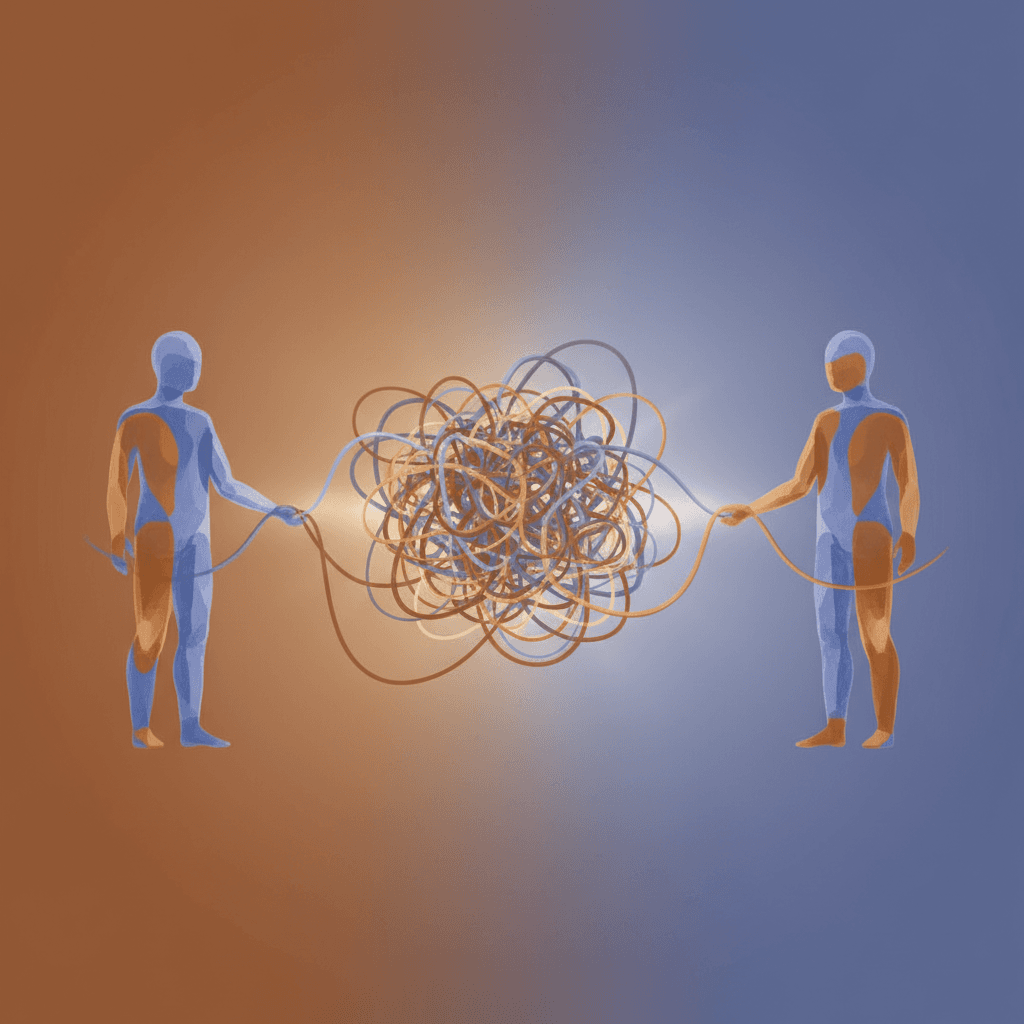
Ask people how they handle conflict at work and you'll hear a lot of reasonable-sounding descriptions: "I pick my battles," "I try to find common ground," "I focus on solutions, not problems." These are, in most cases, euphemisms for avoidance.
Kenneth Thomas and Ralph Kilmann developed their conflict mode instrument in the 1970s, and decades of data since then tell a consistent story: avoidance is the single most common conflict style in professional settings. Not because it works - it rarely does - but because the short-term discomfort of engaging feels worse than the long-term cost of not engaging.
The long-term cost is substantial. The CPP Global Human Capital Report (2008) estimated that U.S. employees spend 2.8 hours per week dealing with conflict - roughly $359 billion in paid hours annually. And that figure measures time spent managing conflict, not the productivity lost to unresolved tension simmering beneath the surface.
Understanding the Thomas-Kilmann Framework
The Thomas-Kilmann model maps conflict behavior along two axes: assertiveness (how much you prioritize your own concerns) and cooperativeness (how much you prioritize the other person's concerns). This creates five modes:
Competing (High Assertive, Low Cooperative)
You pursue your interests at the other person's expense. This gets caricatured as aggressive or selfish, but it has legitimate uses: emergencies requiring quick decisive action, situations where you know you're right on something important, and protecting yourself against people who exploit cooperative behavior.
The problem: overuse creates fear. People stop bringing you information. You win arguments but lose insight.
Accommodating (Low Assertive, High Cooperative)
You yield to the other person's concerns, setting aside your own. Sometimes this is genuine generosity - the issue matters more to them, and you can afford to flex. Sometimes it's conflict avoidance wearing a mask of agreeableness.
The problem: chronic accommodation builds resentment. The accommodator eventually explodes or disengages, and the other person is blindsided because they thought everything was fine.
Avoiding (Low Assertive, Low Cooperative)
You sidestep the conflict entirely. You postpone, redirect, or simply don't respond. This works when the issue is genuinely trivial or when you need time to cool down before engaging productively.
The problem: most workplace avoidance isn't strategic. It's habitual. And avoided conflicts don't resolve - they compound. The minor annoyance you didn't address in January becomes the entrenched resentment that poisons a working relationship by June.
Compromising (Moderate Assertive, Moderate Cooperative)
Both parties give up something to reach a middle ground. This feels fair, and it's often the fastest path to resolution. It works well for moderately important issues where a quick, acceptable solution beats a slow, optimal one.
The problem: compromise on important issues means neither party gets what they actually need. Half-measures can be worse than full commitment to either direction.
Collaborating (High Assertive, High Cooperative)
Both parties work together to find a solution that fully satisfies both sets of concerns. This requires more time, more honesty, and more creative thinking than any other mode. It also produces the best outcomes for complex, high-stakes issues where the relationship matters.
The problem: it's slow, it's hard, and it requires both parties to be willing. You can't collaborate with someone who's competing.
Why People Get Stuck
Most people have one or two default modes they use regardless of context. A person who defaults to accommodating will accommodate during trivial disagreements (fine), interpersonal friction (sometimes fine), strategic decisions (not fine), and ethical concerns (dangerous).
This happens because conflict modes are learned early - usually in family systems - and reinforced through years of repetition before anyone encounters a workplace. By the time you're managing a team, your conflict patterns are deeply grooved.
The Thomas-Kilmann framework is useful not because it tells you which mode is "best" (they all have value in the right context) but because it makes your defaults visible. And visibility is the first step toward choice.
The Anatomy of Productive Conflict
Research by Karen Jehn at the University of Pennsylvania (1995, expanded in 1997) distinguished between task conflict (disagreements about the work itself) and relationship conflict (personal friction). Her finding was nuanced and important: moderate task conflict actually improves decision quality, while relationship conflict almost always hurts performance.
The challenge is that task conflict easily slides into relationship conflict, especially when:
- People feel their identity is tied to their position
- There's an existing trust deficit
- The disagreement is public and someone feels they need to "win"
- Emotions escalate beyond what the actual issue warrants
Keeping task conflict productive requires several specific practices:
Separate the Problem from the Person
Fisher and Ury's "principled negotiation" framework from Getting to Yes (1981) remains the gold standard here. The core discipline is arguing about the issue - the data, the tradeoffs, the risks - without making the argument about the people involved.
This sounds simple. It's extraordinarily difficult when you feel strongly about something, because strong feelings naturally attach to the people on the other side.
Concrete technique: Use "the proposal" as the subject of sentences, not the person. "This approach has a scalability risk" instead of "You're not thinking about scalability." Same content. Entirely different emotional impact.
Name the Conflict Type
This is underused and powerful. When a disagreement surfaces, naming it explicitly - "We have a genuine disagreement about technical approach here, and I think we need to work through it rather than around it" - does three things: it normalizes the conflict, it frames it as task-related (not personal), and it signals willingness to engage.
Establish Safety Before Content
Amy Edmondson's work on psychological safety (2018) applies directly to conflict. Before people will engage honestly in disagreement, they need to believe that doing so won't be punished - not just officially, but socially. A manager who says "I want honest debate" but then visibly favors people who agree with them has undermined safety regardless of their stated intentions.
Practical safety signals during conflict:
- Acknowledging the other person's point before presenting your own
- Asking genuine questions (not rhetorical ones designed to expose weakness)
- Being willing to change your position publicly when presented with good evidence
- Thanking people for disagreeing, especially when it's uncomfortable
Manage Emotional Escalation
Gottman's research on couples (1994) - which has been widely applied to workplace relationships - identified specific behaviors that predict whether a conflict will be productive or destructive. His "Four Horsemen" framework translates directly to work settings:
- Criticism: Attacking the person rather than the behavior. "This code is poorly structured" vs. "You're a sloppy developer."
- Contempt: Communicating disgust or superiority. Eye-rolling, sarcasm, dismissiveness. Contempt is the single strongest predictor of relationship breakdown.
- Defensiveness: Responding to feedback with counter-complaints or explanations rather than acknowledgment.
- Stonewalling: Withdrawing from the conversation entirely. The conflict equivalent of avoiding.
When you notice any of these - in yourself or others - the most productive response is to pause. Not abandon the conversation, but slow it down. "I notice this is getting heated. Can we take ten minutes and come back to this?"
Conflict Resolution as a Learnable Skill
None of this is innate. The people who handle conflict well at work aren't genetically predisposed to it - they've developed specific skills through practice, feedback, and (often) coaching.
The skills stack looks like this:
- Self-awareness: Knowing your default conflict mode and recognizing when it's not serving the situation.
- Emotional regulation: Managing your own arousal level so you can think clearly during disagreement.
- Perspective-taking: Genuinely understanding what the other person needs, not just what they're saying.
- Assertive communication: Stating your needs clearly without aggression.
- Repair: Knowing how to rebuild after a conflict goes poorly.
These five skills map directly to core emotional intelligence competencies. Organizations that invest in developing these skills systematically consistently report better conflict outcomes - not fewer conflicts, but more productive ones.
When to Walk Away
Not every conflict deserves engagement. Strategic avoidance - the conscious choice to let something go because it genuinely doesn't matter enough to spend relational capital on - is a legitimate skill.
The test: ask yourself whether you'll remember this issue in two weeks. If the answer is no, accommodating or avoiding is probably fine. If the answer is yes - or if the issue affects other people, involves values, or will compound over time - engagement is worth the discomfort.
The Organizational Dimension
Individual conflict skills matter, but they exist within organizational systems that either support or undermine them. Organizations that handle conflict well typically share several structural features:
- Explicit conflict norms. Not buried in a handbook, but actively discussed and modeled.
- Managers trained in mediation basics. Not professional mediation, but the ability to facilitate a conversation between two people who are stuck.
- Feedback mechanisms that surface tension early. Regular one-on-ones, retrospectives, and skip-level conversations all create channels for small conflicts to be addressed before they become large ones.
- Accountability without blame. People accept responsibility for outcomes without the conversation becoming punitive.
Building these structures takes time. But every organization that has them will tell you the same thing: the alternative - an avoidance culture where conflicts fester below the surface - costs far more in the long run.
Nora Coaching
Editorial
The team behind Nora, building the future of AI-powered EQ coaching.
Related Articles

The Hidden EQ Challenges of Remote Work (and How to Solve Them)
Remote work didn't just change where we work. It fundamentally altered how we read, express, and respond to emotions - and most teams haven't adapted.

Toxic Positivity at Work: When 'Good Vibes Only' Backfires
Encouraging a positive attitude is one thing. Suppressing genuine emotions under a veneer of cheerfulness is something else entirely - and the research shows it's harmful.

How to Run Emotionally Intelligent Meetings
The difference between a meeting that drains people and one that energizes them has almost nothing to do with the agenda. It's about how emotions are managed.