AI Coaching vs Human Coaching: When to Use Which
A False Dichotomy
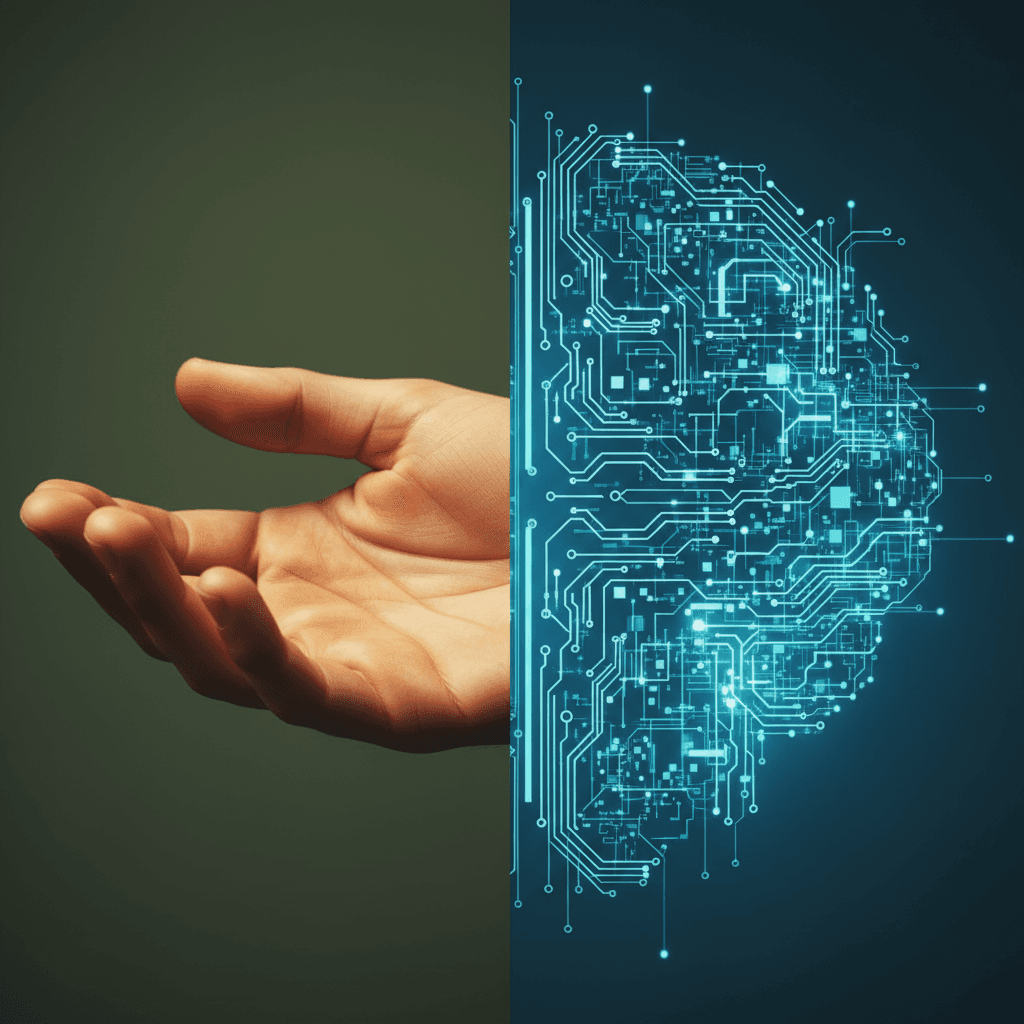
The conversation around AI coaching tends to get polarized fast. On one side: "AI will replace human coaches entirely." On the other: "Real coaching requires human connection, full stop." Both positions miss something important.
The more useful question isn't which is better, but when each approach adds the most value. They solve different problems, and understanding those differences helps you make smarter decisions about your development.
What AI Coaching Does Well
AI coaching platforms have several genuine advantages that aren't just marketing spin. Understanding these helps you use the technology effectively rather than expecting it to be something it's not.
Availability and consistency
This is the most obvious advantage and also the most underrated. Development doesn't happen on a schedule. The moment you need to process a difficult conversation is usually not the moment your bi-weekly coaching session falls. AI coaching is available when you actually need it - at 11pm after a tense dinner, during a lunch break before an afternoon meeting, on a Sunday when you're reflecting on the week.
Grant (2014) found that the frequency of reflective practice was a stronger predictor of development outcomes than the total duration of coaching engagements. Being able to engage with coaching in the moment, rather than waiting days or weeks, meaningfully changes the quality of the reflection.
Pattern recognition at scale
A human coach sees you for an hour every week or two. An AI coaching system processes every interaction, tracking patterns across hundreds of conversations. It can identify that you consistently avoid discussing conflict with authority figures, or that your emotional vocabulary narrows when you're stressed, or that you've made more progress on self-awareness than relationship management.
This isn't a replacement for human insight - it's a different kind of insight. Humans are better at reading between the lines. AI is better at reading across large volumes of data.
Reduced social desirability bias
Here's something that doesn't get discussed enough: people are more honest with AI than with humans about certain topics. Research by Lucas et al. (2014) found that individuals disclosed more openly about emotional struggles and interpersonal difficulties when they believed they were interacting with an AI system rather than a human evaluator.
In coaching, this matters enormously. If you're embarrassed about losing your temper in a meeting, or if you suspect your emotional reactions are more intense than you let anyone see, an AI coaching interaction removes the social performance pressure that can inhibit honest self-reflection.
Cost and scalability
A skilled human coach charges $200-500 per hour. That's appropriate for the expertise involved, but it limits access. Most organizations can only afford to provide coaching to senior leaders. AI coaching dramatically changes the economics, making ongoing developmental support available to every employee in an organization, not just the top tier.
This isn't about replacing expensive coaching with cheap coaching. It's about providing a baseline of developmental support that was previously impossible to scale.
What Human Coaching Does Well
With all that said, human coaches bring capabilities that current AI systems genuinely cannot match. Being clear-eyed about these prevents disappointment and helps you invest in human coaching where it matters most.
Relational depth and attunement
The coaching relationship itself is a primary mechanism of change. Carl Rogers' work on therapeutic conditions - unconditional positive regard, empathic understanding, congruence - applies equally to coaching relationships (Rogers, 1957). A skilled human coach creates a relational space where you feel genuinely seen and understood, and that experience is itself developmentally significant.
AI can simulate empathy. It cannot feel it. For many developmental challenges, particularly those involving shame, vulnerability, or deep-seated patterns, the experience of being understood by another human being is irreplaceable.
Intuitive reading of what's not said
Experienced coaches pick up on hesitations, shifts in tone, contradictions between words and affect, and topics that are conspicuously avoided. They notice when your energy changes mid-sentence or when you give a polished answer that doesn't quite ring true.
Erik de Haan's research on critical moments in coaching (de Haan, 2008) found that the most impactful coaching interventions often responded to subtle, non-verbal cues that the client themselves weren't fully aware of. This kind of intuitive, embodied attunement remains distinctly human.
Navigating complex relational dynamics
When your coaching challenge involves intricate organizational politics, culturally sensitive situations, or relationships with layered power dynamics, human coaches bring contextual judgment that AI systems lack. They understand organizational culture not as a data input but as a lived experience. They can help you navigate situations where the "right" answer depends on dozens of unspoken social variables.
Accountability with relationship stakes
There's a particular kind of accountability that comes from knowing another person is invested in your development. When your coach asks how the experiment you committed to went, you feel the weight of that relationship in a way that an AI follow-up doesn't replicate. For people who primarily develop through relational accountability, human coaching remains the stronger lever.
The Hybrid Model: More Than the Sum of Parts
The most effective approach for most people and organizations combines both modalities strategically. Here's what a well-designed hybrid model looks like in practice:
AI for daily practice and reflection
Between human coaching sessions, AI coaching serves as a practice space. You bring daily interactions, process emotional reactions in real-time, and build the pattern awareness that makes your human coaching sessions more productive.
Think of it like physical training: your human coach is the personal trainer who designs your program and pushes your growth edges. The AI is the gym you have access to every day between sessions.
Human coaching for breakthrough moments
Certain developmental challenges require the relational depth that only human coaching provides. When you're confronting a deeply held belief about yourself, navigating a career-defining relationship, or working through a significant professional setback, human coaching brings something qualitatively different.
Research by Theeboom, Beersma, and van Vianen (2014) in their meta-analysis of coaching outcomes found that the quality of the coaching relationship was the single strongest predictor of outcomes, which suggests that for high-stakes developmental work, the human element remains critical.
AI for assessment continuity
AI-powered platforms can provide ongoing assessment and tracking that would be impractical for human coaches to deliver. Rather than doing a formal assessment every six months, AI coaching can track competency indicators across every interaction, providing a continuous development picture.
This also helps human coaches. When a human coach can see AI-tracked patterns from dozens of interactions between sessions, they arrive at each session with richer context than their notes alone would provide.
When to Choose What: A Practical Framework
Start with AI coaching when:
- You're new to EQ development and want to explore without the commitment of hiring a coach
- Your primary need is consistent practice and self-reflection support
- You want to build self-awareness through an assessment and ongoing tracking
- Budget constraints make regular human coaching impractical
- You want immediate support for processing daily workplace interactions
- You're more comfortable being honest with a non-human listener initially
Invest in human coaching when:
- You're working through a specific, high-stakes professional challenge
- Your development goals involve deeply held patterns or beliefs
- You need someone who understands your organizational context from the inside
- You've hit a plateau in your development and need a fresh perspective
- The coaching challenge involves navigating sensitive relational dynamics
- You respond strongly to interpersonal accountability
Use both when:
- You're serious about sustained EQ development over months or years
- Your organization is building a coaching culture and wants to reach every employee
- You want the scalability of AI with the depth of human connection
- You're preparing for a significant leadership transition
Privacy Considerations
One factor that deserves its own section: data privacy. AI coaching platforms vary dramatically in how they handle your data. Some use conversations to train their models. Some store everything in plaintext. Some share data with employers.
Before committing to any AI coaching platform, ask specifically:
- Are my conversations encrypted? (End-to-end encryption is the gold standard)
- Can my employer see my individual conversations? (They shouldn't be able to)
- Is my data used to train AI models? (It shouldn't be without explicit consent)
- Can I export or delete my data? (GDPR-compliant platforms support this)
A platform built with genuine privacy protections will answer all four questions clearly. One that hedges or buries the answers in fine print should give you pause.
The Bottom Line
The question isn't whether AI or human coaching is "better." It's whether you're using each tool where it adds the most value. AI coaching democratizes access to developmental support and provides consistent practice opportunities. Human coaching provides relational depth and intuitive guidance for complex challenges.
The smartest approach for most people: start with AI coaching to build foundational self-awareness and establish a practice rhythm. Add human coaching when you identify specific growth edges that benefit from relational depth. Let the two inform each other.
The worst approach: choosing neither because you can't decide which is better.
Nora Coaching
Editorial
The team behind Nora, building the future of AI-powered EQ coaching.
Related Articles

Five Coaching Skills Every Manager Should Steal from Professional Coaches
You don't need a coaching certification to coach your team effectively. These five evidence-based skills are the ones that actually move the needle.

Building a Coaching Culture in Your Organization
A coaching culture isn't about hiring more coaches - it's about changing how people talk to each other. Here's what that looks like in practice.

Why People Resist Coaching (and How to Get Past It)
Resistance to coaching isn't irrational - it's usually self-protective. Understanding the specific barriers helps you move through them rather than fighting them.